Company Name: Hebei Situo Building Materials Co., Ltd
Phone: 15731143000
Postal Code: 050031
Email: 1665089017@qq.com
Website: www.syjgm.cn
Address of Gaocheng factory: No.1 Road, Jiumen Industrial Park, Gaocheng District
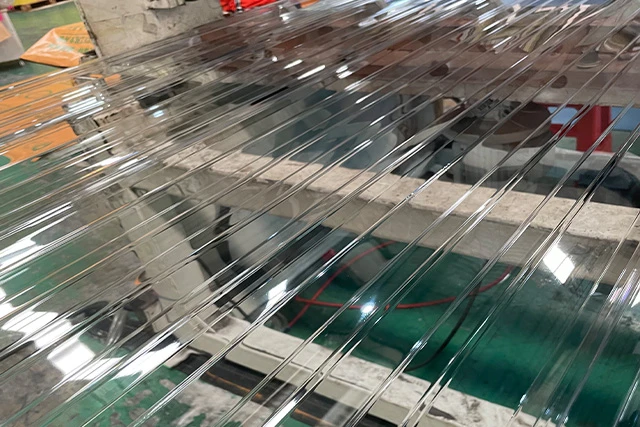
lighting panelWidely used in lighting scenarios such as industrial plants, agricultural greenhouses, public buildings, and municipal facilities, it has become a commonly used material for building lighting engineering due to its characteristics of resistance to breakage, good transparency, weather resistance, anti-corrosion, and easy cleaning. However, long-term exposure to outdoor environments with high dust and alternating temperature differences can lead to the accumulation of dust, oil stains, moss, and rain stains on the surface of the daylighting board. Over time, this can result in a decrease in light transmittance, yellowing of the board surface, and aging of the surface layer, affecting the daylighting effect and the service life of the board.
It is particularly important to maintain the transparency, cleanliness, and stable operation of the daylighting board for a long time, extend the service life of the board, and do a good job in daily cleaning and regular maintenance. Many operation and maintenance personnel have caused scratches, delamination, accelerated aging, and other problems on the surface of the daylighting board due to improper cleaning methods and inadequate maintenance. This article combines industry standardized maintenance standards to explain in detail the daily cleaning methods, periodic maintenance points, and common maintenance misconceptions of daylighting panels. It is suitable for various FRP daylighting panel users to refer to and help standardize operation and maintenance management.
1、 Daily cleaning method for daylighting panels: non-destructive cleaning, retaining light transmission performance
The surface of the daylighting board has a dense closed cell structure, which has good stain resistance and light daily stain adhesion, without the need for complex cleaning processes. The core principles of cleaning are gentle decontamination, elimination of hard damage, and avoidance of corrosion. According to the degree of stains, it can be divided into daily basic cleaning and special cleaning for stubborn stains.
1. Mild floating dust daily cleaning
Outdoor installation of roof and wall lighting panels, with minor stains such as daily dust, willow catkins, and floating soil, can rely on natural rainwater to achieve self-cleaning, suitable for regular maintenance during rainy seasons. In dry and less rainy factory and construction sites with high dust, low-pressure water flushing combined with soft sponge and dust-free cloth can be used to gently wipe the surface of the board to remove floating dust and quickly restore the transparency of the collected light. The operation is simple and will not damage the surface of the board.
2. Regular cleaning for moderate stains
For stubborn shallow stains such as slight oil stains, rain stains, and mud spots attached to the board surface, a neutral cleaning agent can be diluted with water and a mild cleaning solution can be prepared. Dip a soft cloth or sponge into the solution and evenly wipe the stained area on the board surface. After wiping, immediately rinse with clean water and wipe off any residual moisture on the board surface to avoid the adhesion of cleaning agents and long-term corrosion of the surface of the board. Prohibit the use of irritating cleaning materials throughout the process to protect the weather resistant coating of the board.
3. Special cleaning for severe stains
The lighting panels in chemical workshops and damp shaded areas are prone to heavy stains such as oil stains, moss, mold, and stubborn scale. When cleaning, you can first wet the surface with clean water to soften stubborn stains, and then use a neutral specialized cleaning agent to wipe them. Local stubborn stains can be gently cleaned repeatedly. Do not use corrosive cleaning agents such as strong acids, strong alkalis, organic solvents, etc., to avoid yellowing of the board, surface delamination, and damage to the transparent layer.
Many daylighting panels experience premature aging, loss of light, and damage, not due to natural wear and tear, but rather due to improper cleaning procedures. Daily cleaning should strictly avoid the following misconceptions and protect the structure and transparency of the board to a large extent.
1. It is prohibited to use sharp tools such as steel wire balls, hard brushes, and blades to polish or scratch the surface of the FRP daylighting board. The transparent coating on the surface of the FRP daylighting board is relatively thin, and hard tools can easily cause fine scratches and scratches, leading to faster dust accumulation and continuous decrease in light transmittance in the later stage.
2. It is prohibited to use strong corrosive solvents such as hydrochloric acid, sulfuric acid, acetone, and diluents for cleaning. Such raw materials can damage the resin structure of the board, causing the board surface to lose light, change color, and become brittle, greatly shortening its service life.
3. It is prohibited to use high-pressure water guns to directly hit the joints and edge sealing positions of the board surface at close range. High pressure water flow can easily penetrate into the interior of the board joints, damage the sealing structure, and cause problems such as water seepage, delamination, and moisture on the base layer.
4. Emergency flushing and cleaning are prohibited in high-temperature and sun exposed environments. Sudden temperature changes can easily cause slight stress on the board, and long-term accumulation can lead to deformation and cracking hazards.
3、 Key points for regular maintenance and upkeep of daylighting panels to extend their service life
Cleaning is only the basic maintenance. Regular inspection, protection, and fine-tuning maintenance are necessary to fundamentally ensure the long-term stable operation of the daylighting panel, reduce failure and wear, and lower the cost of replacement in the later stage. Based on industry operation and maintenance experience, layered maintenance can be carried out on a monthly, quarterly, and annual basis.
1. Monthly routine inspection and maintenance
Regularly inspect the condition of the daylighting board surface to see if there are any issues such as large areas of dirt accumulation, local damage, minor cracks, or missing edges; Check whether the drainage on the board surface is smooth, whether there is accumulated water or silt, and promptly clear the drainage channel to avoid long-term soaking of the board in water and prevent the growth of moss and mold. At the same time, check for any debris accumulation on the surface of the daylighting board, promptly clean up tree branches, construction waste, gravel, etc., and avoid external pressure damage.
2. Quarterly sealing and firmware inspection
Check the fixing fixtures, waterproof rubber strips, and sealant status of the skylight panel. Check whether the self tapping screws and fixed brackets are loose or corroded, whether the sealant has cracked, peeled off, aged and fallen off, and whether the rubber strip has deformed and failed. If loose fasteners are found, they should be tightened in a timely manner. Aging sealing materials should be repaired or replaced in a timely manner to effectively prevent water and air leakage in the lighting positions of the roof and walls, and to protect the stability of the installation structure of the board.
3. Annual overall maintenance and protection
Conduct a comprehensive inspection of the daylighting board once a year to check for overall deformation, aging, yellowing, brittleness, etc., and verify whether the overlapping position of the board is regular and whether the expansion and contraction allowance is sufficient. For surfaces with slight wear and loss of gloss, transparency can be restored through standardized cleaning and maintenance; For cracked, severely aged, and damaged boards, timely replacement and treatment should be carried out to avoid large-scale leakage hazards during the rainy season. At the same time, inspect the overall load-bearing structure of the roof to prevent damage to the daylighting panels caused by building deformation and pulling.
4、 Exclusive maintenance techniques for lighting panels in different scenarios
1. Industrial plant lighting panel
There is a lot of dust and oil pollution in the factory area. It is recommended to carry out basic cleaning every 1-2 months and deep decontamination every quarter. Timely clean up the accumulation of production dust and oil pollution to avoid long-term adhesion and infiltration of stains on the surface of the board. Simultaneously check the anti-corrosion status of the firmware and adapt it to complex industrial working conditions.
2. Agricultural greenhouse lighting board
A humid environment is prone to the growth of moss and mold, so it is necessary to regularly clean the attachments on the board surface, maintain smooth light transmission, and ensure balanced lighting inside the shed. After the rainy season, clean up the accumulated water and silt in a timely manner to avoid long-term moisture corrosion of the board and maintain its transparency and toughness.
3. Public building daylighting panels
Due to high foot traffic and high aesthetic requirements, the surface of the building can be regularly and finely cleaned to maintain its cleanliness. Check the stability of high-altitude board fixation, eliminate safety hazards such as looseness and detachment, and balance aesthetics and safety performance.
5、 Daily maintenance summary and practical suggestions
Overall, the core of cleaning and maintenance for daylighting panels lies in gentle cleaning, regular inspections, timely repairs, and avoiding damage. Daily self-cleaning with rainwater and regular manual washing can maintain the transparency of the board surface; By regularly checking the firmware, sealing, and board status, and promptly addressing aging, loosening, and damage issues, various maintenance hazards can be effectively avoided.
Standardized cleaning and maintenance methods can not only ensure continuous protectionlighting panelTransparent effect, improving building lighting efficiency, effectively delaying the aging rate of panels, maintaining structural stability, significantly extending the service life of lighting panels, and helping various building scenarios reduce later maintenance and replacement costs.
Contact Us
15731143000
Company Name: Hebei Situo Building Materials Co., Ltd
Postal code: 050031
Email: 1665089017@qq.com
Website: www.syjgm.cn
Address of Gaocheng factory: No.1 Road, Jiumen Industrial Park, Gaocheng District