
Company Name: Hebei Situo Building Materials Co., Ltd
Phone: 15731143000
Postal Code: 050031
Email: 1665089017@qq.com
Website: www.syjgm.cn
Address of Gaocheng factory: No.1 Road, Jiumen Industrial Park, Gaocheng District
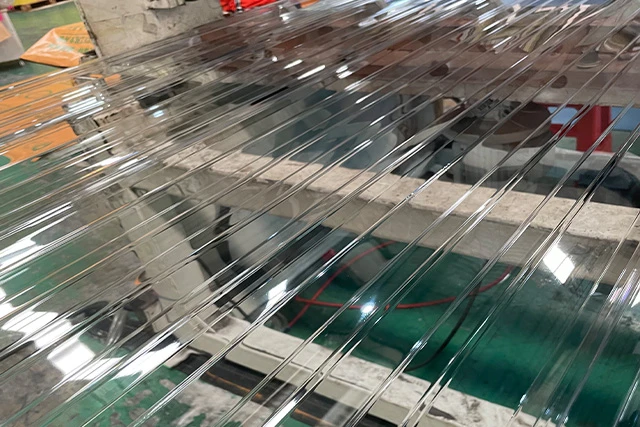
lighting panelAs the core lighting material for industrial plants, agricultural greenhouses, warehouses and other buildings, its transparency and service life are directly related to the building experience and maintenance costs. During construction, handling, or later use, it is inevitable that the surface of the daylighting board will have varying degrees of scratches. Many users may wonder whether these scratches will affect the daylighting effect? Will it shorten the service life of the daylighting board? In fact, the impact of scratches on the surface of the skylight panel on its transparency and service life mainly depends on the depth, width, and later maintenance of the scratches. Not all scratches will cause serious hidden dangers. This article combines the material characteristics of daylighting panels with practical usage scenarios to analyze in detail the specific impact of scratches on their light transmission performance and service life. At the same time, targeted response suggestions are provided to provide practical reference for users, helping to extend the service life of daylighting panels and ensure daylighting effectiveness.
1、 The impact on transparency performance: judged by degree, with limited influence from shallow scratches
The core function of a daylighting board is to transmit light, and its transparency mainly depends on the surface flatness and material transparency. Scratches can damage the surface integrity and have varying degrees of impact on the transparency effect, which can be divided into two situations.
One is shallow scratches (scratch depth ≤ 0.1mm, width ≤ 0.5mm), which have little impact on the transparency performance. These scratches are often caused by slight friction or small debris scratching, only damaging the surface protective film of the daylighting board and not touching the core substrate. Due to the shallow scratches, although light will undergo slight refraction when passing through, it will not significantly block the light. The overall transmittance usually decreases by less than 5%, which is difficult to detect with the naked eye and will not affect the normal lighting needs inside the building. Especially in scenes such as industrial plants and agricultural greenhouses where lighting accuracy is not high, it can be basically ignored.
The second is deep scratches (scratch depth>0.1mm, width>0.5mm), which will significantly affect the light transmission performance. This type of scratch is often caused by sharp objects scraping or heavy objects hitting, which not only damages the surface protective film, but also damages the substrate of the lighting board, forming obvious grooves or cracks. When light passes through, it will undergo severe refraction and scattering at the scratch, causing the propagation of light to be obstructed, and some light will be blocked by the scratch. The overall transmittance can decrease by 10% -30%, or even higher. For scenarios such as agricultural greenhouses that require sufficient light, it can affect crop photosynthesis; For industrial plants, it may lead to uneven lighting inside the workshop, affecting production operations.
In addition, if there are a large number of scratches and their distribution is dense, even shallow scratches can overlap and affect the light transmission effect, resulting in a decrease in the overall light transmission rate of the lighting panel, leading to "uneven light transmission and dim light".
2、 The impact on service life: the core depends on whether the protective layer is damaged, and hidden dangers are often caused by later erosion
The service life of daylighting panels mainly depends on the stability of the surface protective layer (UV resistant coating, wear-resistant coating) and the core substrate. The impact of scratches on the service life depends on whether the surface protective layer is damaged, which in turn leads to substrate aging and damage.
Shallow scratches only damage the surface layer of the protective film, without damaging the core protective structure, and have little effect on the service life.lighting panelThe protective layer on the surface itself has certain wear resistance and aging resistance. Slight scratches will not lead to the failure of the protective layer. The core substrate can still be effectively protected, and can normally resist the erosion of ultraviolet rays, wind, rain, humidity and other external factors. The service life will not be significantly shortened. As long as the later maintenance is done, the normal service life can be reached.
Deep scratches can damage the surface protective layer and seriously affect its service life. When scratches penetrate the protective layer and touch the core substrate, external rainwater, moisture, ultraviolet rays, etc. will directly corrode the substrate, causing problems such as aging, yellowing, and brittleness. Rainwater will seep into the interior of the substrate through scratches, causing delamination and cracking of the daylighting board; Long term exposure to ultraviolet radiation can accelerate the degradation of substrates, reduce their toughness and strength, and lead to damage and fracture in the later stages. Especially in special climate areas such as rainy, high humidity, and high salt spray along the coast, the erosion rate at the scratch site will accelerate, which may shorten the service life of the daylighting board by 30% -50%, and even lead to hidden dangers such as premature damage and leakage.
In addition, if scratches are not dealt with in a timely manner and dust and debris accumulate for a long time, it will further intensify erosion, accelerate the aging of the lighting panel, and shorten its service life.
3、 The impact of scratches varies in different scenarios
The light transmission requirements and usage environment of daylighting panels vary in different architectural scenarios, and the impact of scratches also varies. It is necessary to take a targeted approach based on the characteristics of the scene.
Industrial plants, warehouses and other scenes: These scenes have relatively low requirements for lighting accuracy, and shallow scratches have little impact; If deep scratches do not cause damage to the substrate, they only affect local lighting and have limited impact on overall use, but they need to be dealt with in a timely manner to avoid later erosion.
Agricultural greenhouse scene: This type of scene requires high transparency performance. Even shallow scratches, if densely distributed, will affect the light absorption of crops; Deep scratches can directly affect the lighting effect and accelerate the aging of the lighting panel, which needs to be dealt with in a timely manner to avoid affecting crop growth.
Special climate scenarios (rainy, high humidity, coastal): Regardless of the depth of scratches, attention should be paid to them. Shallow scratches need to be cleaned and maintained, while deep scratches need to be repaired in a timely manner to prevent rainwater, salt spray, and other factors from corroding the substrate through scratches and shortening its service life.
4、 Suggestions for dealing with and preventing scratches, reducing their impact and extending their lifespan
Regarding the scratches on the surface of the daylighting board, the impact on its transparency and service life can be reduced through "timely response+early prevention". Specific suggestions are as follows.
One is scratch treatment: Shallow scratches do not require special repair. Regularly rinse with clean water to remove dust and debris from the scratch area and avoid accumulation and erosion; Deep scratches need to be repaired in a timely manner. Use a specialized repair agent compatible with the material of the daylighting board, fill the scratches, polish them flat, and then apply a layer of protective coating to restore surface protection performance and avoid substrate erosion. If the scratches are too severe and have caused damage or cracking of the substrate, it is necessary to cut and replace the damaged parts in a timely manner to avoid the expansion of hidden dangers.
Secondly, advance prevention: During the construction process, avoid sharp objects or heavy objects from contacting the surface of the daylighting board, take protective measures during transportation, and avoid dragging and friction during laying; During later use, regularly clean the roof debris to avoid scratching the daylighting board with tree branches, sand and gravel; A protective film can be laid on the surface of the daylighting board (to be removed after construction), or a protective net can be installed to reduce scratches.
In conclusion,lighting panelThe impact of surface scratches on light transmission performance and service life mainly depends on the depth of scratches and post maintenance. Shallow scratches have limited impact, just do a good job of cleaning and maintenance; Deep scratches can significantly reduce light transmittance and accelerate substrate aging, requiring timely repair or replacement. In practical use, preventing and responding to scratches can not only ensure the transparency of the daylighting board, but also extend its service life, fully leverage the core advantages of the daylighting board, and provide stable daylighting guarantee for various types of buildings.
Contact Us
15731143000
Company Name: Hebei Situo Building Materials Co., Ltd
Postal code: 050031
Email: 1665089017@qq.com
Website: www.syjgm.cn
Address of Gaocheng factory: No.1 Road, Jiumen Industrial Park, Gaocheng District